
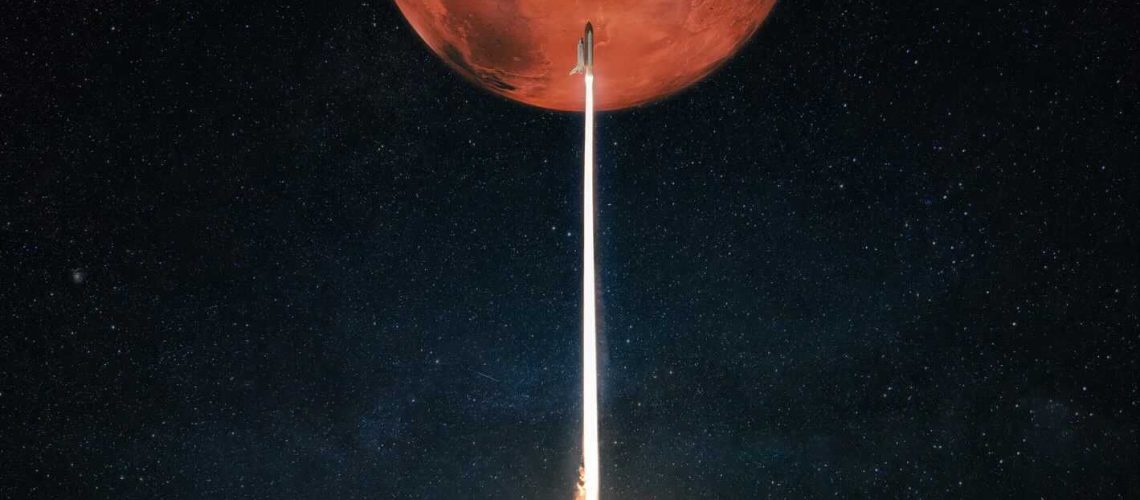
Is terraforming Mars possible with the technology we have today?
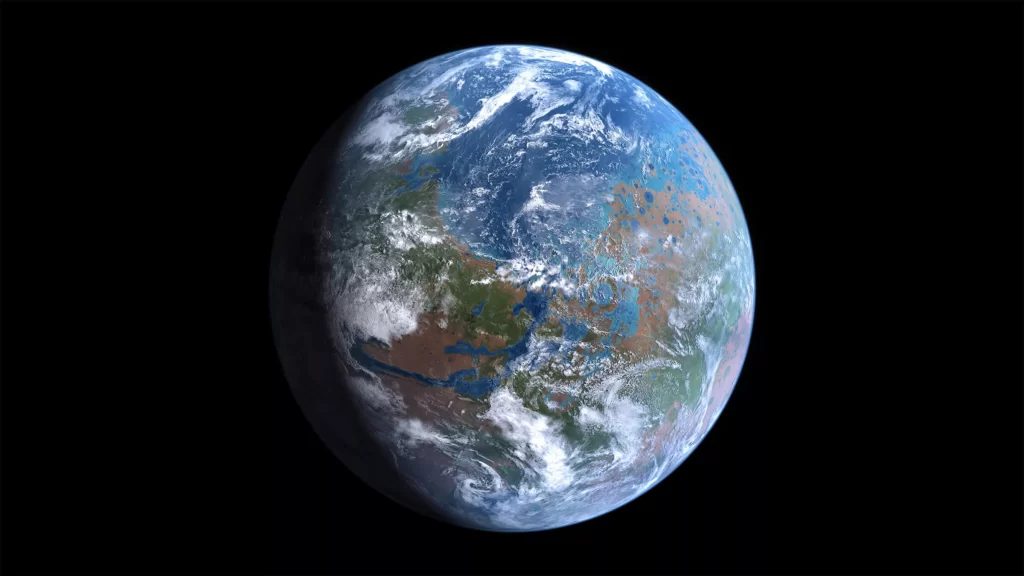
Mars was once an Earth-like world.
When life emerged on our watery planet sometime between 3.5 to 4 billion years ago, Mars was also home to lakes of liquid water and possibly flowing rivers. Combined with a thick atmosphere, a magnetic field to shield against radiation, and a variety of organic molecules, Mars had favorable conditions to form and support life as we know it.
Mars probably didn’t remain habitable for very long, though. The Red Planet lost its magnetic field sometime between 3 to 4 billion years ago, which allowed the solar wind––an incessant stream of energetic particles coming from the Sun––to strike and strip away most of the planet’s atmosphere and surface water, turning Mars into the chilly desert we see today.
Can we reverse nature’s effects and terraform Mars into a habitable planet again? Here’s what it could take.
Warming up the Red Planet
Mars’ atmosphere is far too thin and cold to support liquid water on its surface. With an atmospheric pressure just 0.6% of Earth’s, any surface water would quickly evaporate or freeze, just as NASA’s Phoenix lander saw in 2008.
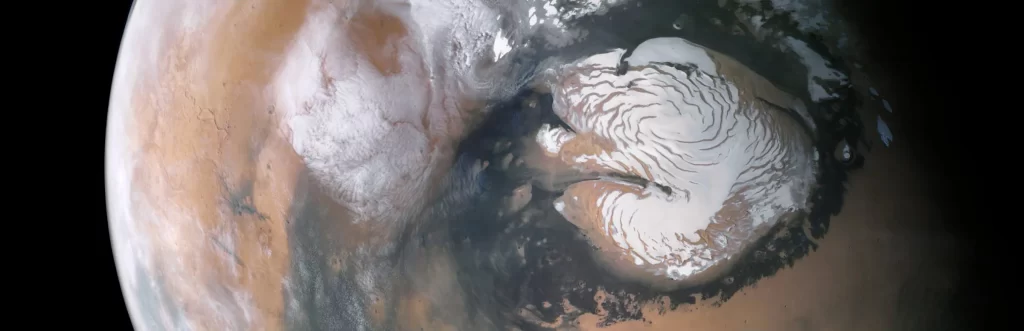
There are a few different schools of thought on how—or if—we could heat up Mars’ atmosphere and make it more hospitable to life. Elon Musk has suggested, for example, that we could terraform Mars by exploding nuclear bombs over its polar caps. He says that the radiation wouldn’t be an issue since the explosion would be in space over the poles, but the heat release would vaporize the frozen carbon dioxide to greenhouse warm the planet and melt the water ice.
Nuking Mars raises a host of scientific, ethical, and legal questions. From a scientific perspective, researchers estimate that the resulting melted water ice could easily cover the planet to a depth of a few tens of meters, but it probably wouldn’t last for long. The carbon dioxide added to Mars’ atmosphere by vaporizing the polar caps would only double the pressure, a far cry from the comparable pressure to Earth required for conditions warm enough to sustain surface liquid water and atmospheric water vapor.
Mars has more abundant sources of carbon dioxide, such as those locked in the martial soil and tightly bonded carbon in minerals. But based on 20 years of NASA and ESA satellite data, researchers estimate that even if we mine Mars’ entire surface for carbon dioxide, the atmospheric pressure would still only be about 10-14% of Earth’s. This would correspond to an average temperature rise of about 10 degrees Celsius––not nearly enough to sustain liquid water.
To put this all into perspective: we would need more carbon dioxide to meaningfully warm up Mars than humans have released throughout our entire history on Earth. Terraforming Mars is therefore a daunting endeavor that doesn’t seem possible with current technology.
With future technological advances, we might be able to excavate minerals deep in the Martian crust that may hold significantly more carbon dioxide and water. But the extent of these buried deposits isn’t currently known or evidenced by satellite data. We could also artificially introduce heat-trapping gases that are superior to carbon dioxide, like chlorofluorocarbons. These gases are short-lived, though, so the process would need to be repeated on a large scale to keep Mars warm.
Another idea is to import gases by redirecting comets and asteroids to hit Mars. However, this isn’t exactly practical, as it would require an inordinate amount of impacts to make any meaningful difference.
Breathing on Mars
Another challenge is making Mars’ atmosphere breathable. The MOXIE experiment on NASA’s Perseverance rover aims to convert carbon dioxide from Mars’ atmosphere into oxygen. If it works, future human explorers could use this kind of technology to generate oxygen for their habitats. However, doing this for the entire planet may not be feasible. This is why some researchers suggest turning to forms of life that have already transformed Earth’s atmosphere.
On Earth, cyanobacteria were responsible for converting, via photosynthesis, our atmosphere of methane, ammonia and other gases around 2.5 billion years ago into the oxygen-rich one of today. Since Mars receives less than half the sunlight as Earth—and has a global dust storm problem that makes visibility worse—researchers have suggested that we introduce special microorganisms on Mars that photosynthesize in low-light to create breathable air for humans. When paired with other organisms, an entire life cycle could be created on Mars with a favorable blend of gases.